
September 18, 2026
What Platform Engineering Services Actually Include

Chintan Viradiya
Author

Shyam Kapdi
Contributor

Shailesh Davara
Reviewer
Platform engineering gets used loosely enough that two people asking about it can be picturing two different things. One means “automate our deployments.” Another means “rebuild our entire cloud setup.” Neither is wrong, but neither is complete either. This post breaks down what’s actually included, what isn’t, and gives you a clear list to hold any vendor’s pitch against.
Platform engineering is the work of building the internal systems, tools, and processes that let a development team ship software without re-solving infrastructure problems every single time. Strip away the terminology, and it comes down to one thing: your developers are spending too much time on servers, pipelines, and environments, and not enough time building the product you’re paying them to build. Platform engineering exists to fix that ratio.
What’s Usually Included
Here’s what typically falls under this work, broken down without the marketing gloss:
-
Cloud migration. Moving applications and data from on-premises systems (or from one cloud provider to another) into an environment your team can actually manage without a full-time babysitter for every server.
-
Self-service developer platforms. Internal tools that let developers spin up environments, deploy code, or request resources on their own, instead of filing a ticket and waiting three days for someone else to do it.
-
Automated delivery. Setting up pipelines so that code goes from “written” to “live” through a repeatable, tested process, instead of a manual checklist someone runs at 11 PM before a release.
-
Observability. Systems that tell you what’s actually happening in production errors, slowdowns, failures before your customers tell you first.
-
GitOps and Infrastructure as Code (IaC). Managing your infrastructure the same way you manage your code: version-controlled, reviewed, and repeatable, instead of manually configured and undocumented.
Each of these is a real discipline on its own. This isn’t a guide to any single one; it’s a map of where they sit relative to each other.
What It Doesn’t Include
This is where a lot of vendor conversations get vague, so let’s be direct:
- It is not application development. Platform engineering builds the roads your developers drive on. It doesn’t build the car.
- It is not a replacement for your product team. No vendor should be making product decisions for you. If a proposal starts touching your roadmap, that’s a scope problem.
- It does not mean outsourcing engineering decisions. A good partner gives you options and tradeoffs. A bad one tells you what to do and expects you to sign off without understanding why.
If a vendor’s pitch blurs any of these three lines, that’s worth asking about directly before you sign anything.
How an Engagement Usually Starts
Most serious engagements don’t start with a build. They start with an audit.
A proper assessment phase looks at what you already have, your current infrastructure, your deployment process, your team’s actual day-to-day pain points before anyone recommends changing anything. This usually takes a few weeks, not months, and it produces a specific list of problems and options, not a sales deck disguised as a strategy document.
If a vendor skips straight to a proposal without looking at what you’re currently running, that’s a signal, not a shortcut.
How to Tell If You Need This Now vs Later
This isn’t a hard sell, it’s a self-check. A few honest signals worth sitting with:
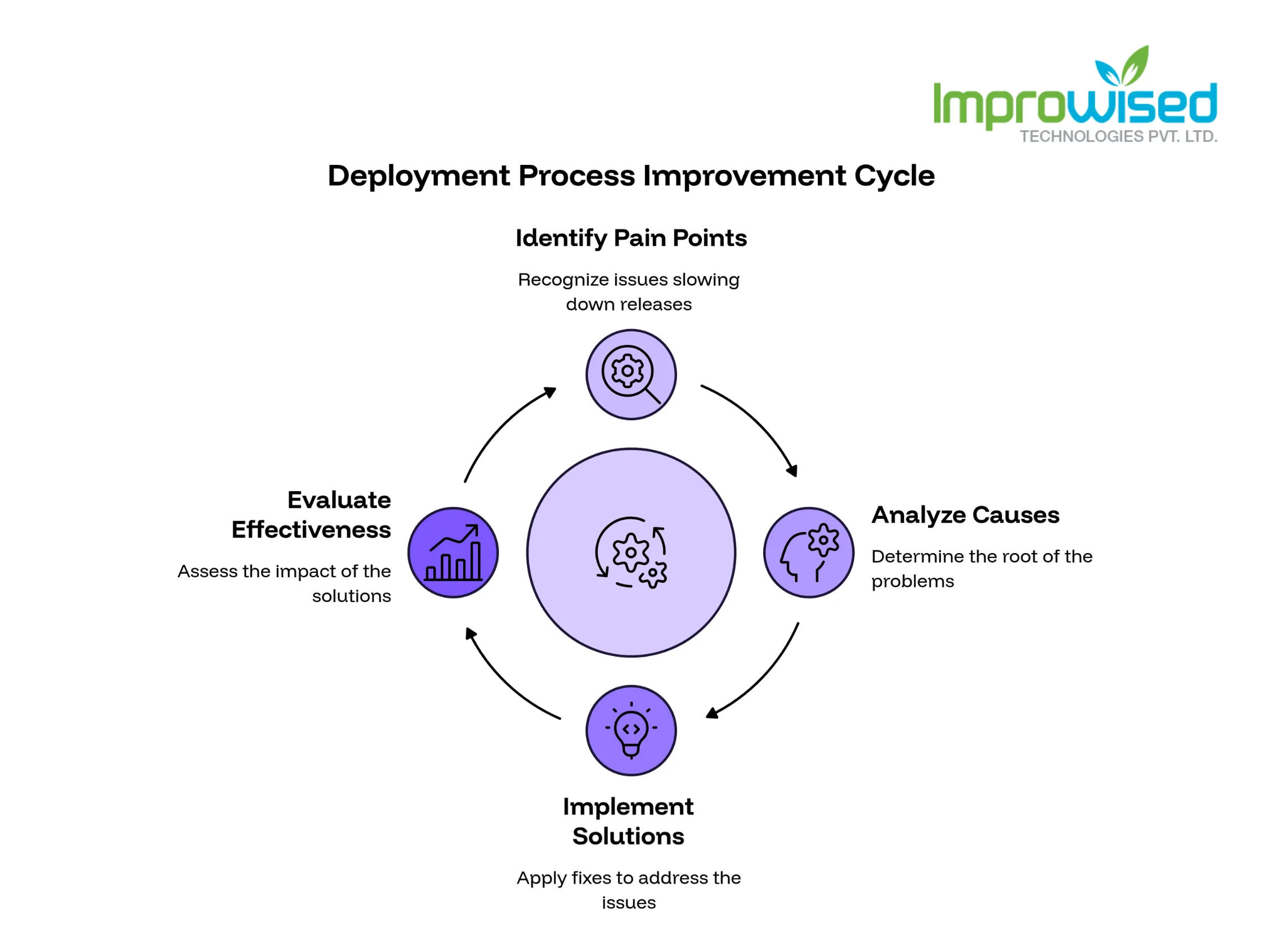
- Deployment pain is slowing releases. If shipping a feature takes longer because of infrastructure friction rather than the actual coding work, that’s a cost you’re paying every sprint. If this sounds familiar, read our breakdown on why your deployment frequency is slowing down.
- Inconsistent environments are causing bugs. “It worked on my machine” showing up regularly in your team’s vocabulary is a process problem, not a bad luck problem.
- Your team is growing faster than your process. Ten developers can coordinate informally. Fifty can’t. If headcount has outgrown your shared standards, the gap will keep widening on its own.
If none of these describe your team right now, you’re probably fine waiting. If two or more do, it’s worth an honest look, not a rebuild. You can quantify exactly where your gaps are in under 5 minutes by taking our free Platform Engineering Maturity Assessment.
What “Enterprise” Platform Engineering Changes vs .a Smaller Team
The core work doesn’t change much at scale. What changes is the surrounding complexity:
- Compliance requirements multiply, audit trails, data residency, access controls that a 20-person team doesn’t need to think about yet. See how we handled strict healthcare compliance while scaling to 7,000+ releases a year in our GitOps Transformation Case Study.
- Multi-team coordination becomes its own problem. Getting five teams to agree on one deployment standard is a different challenge than getting one team to follow it.
- Governance, who can approve what, who owns which system, and how changes get reviewed needs to be explicit instead of understood informally over coffee.
None of this makes enterprise platform engineering a different discipline. It makes it a more coordinated version of the same one.
Where to Start
If you’re this early in figuring out what you actually need, the right first step usually isn’t a full platform build, it’s an Infrastructure & Architecture Review. It gives you a clear picture of where you stand before anyone recommends spending money on where you should go next. Contact our team today to schedule your review and get a baseline on your current infrastructure.
Frequently Asked Question
Get quick answers to common queries. Explore our FAQs for helpful insights and solutions.
It's the practice of building internal tools and systems so developers can deploy and manage software without manually handling infrastructure every time. It reduces repetitive, low-value work so engineering time goes toward the product instead.
No. DevOps is a set of practices and culture around collaboration between development and operations. Platform engineering is the discipline of building the actual internal platform, often using DevOps practices as part of how it's built.
If releases are slowing down due to infrastructure issues, environments are inconsistent enough to cause bugs, or your team has grown faster than your internal processes, those are signals worth investigating. If none of that applies, it can likely wait.
No. It supports your engineering team by removing repetitive infrastructure work. Product and engineering decisions stay with your team, a platform engineering partner should not be making those calls for you.
The first phase is usually an assessment, taking a few weeks. After that, timelines depend on scope; a single pipeline automation project looks very different from a full cloud migration.
The core work is similar. What changes at enterprise scale is the added complexity: compliance requirements, coordination across multiple teams, and formal governance that smaller teams often handle informally.
Ask what their assessment process looks like before any build starts, whether they're making product decisions or infrastructure decisions, and ask for a specific list of what's included and excluded in their scope, not a general description.
Written by
Chintan Viradiya
Chintan Viradiya is a DevOps Engineer at Improwised Technologies. Passionate about Infrastructure as Code and CI/CD pipelines, he focuses on optimizing cloud deployments and enhancing the security and performance of modern applications. He plays a key role in ensuring high availability and driving DevOps best practices across projects


September 16, 2026
What Actually Slows Kubernetes Down (And What to Fix Before Adding Nodes)
Hussain Gandhi
Author



September 10, 2026
What Off-Premise Migration Actually Involves (And What It Costs)
Chandan Teekinavar
Author



September 7, 2026
What Uptime Assurance Actually Covers And What It Doesn't
Chintan Viradiya
Author
Optimize Your Cloud. Cut Costs. Accelerate Performance.
Struggling with slow deployments and rising cloud costs?
Our platform engineering solutions are built on open-source tools and use AI natively across the workflow.